

Client
Kasisto, Inc.
What is KAI?
Scope
0-1 envisioning, digital visual experience design and motion design, executed in no more than 20 hours per week and a very low budget
Role and Contributions
UI/UX Designer, with focus on Visual Design
and Animation
Timeline:
April 2020 - July 2020
Kasisto Artificial Intelligence - KAI, a banking virtual assistant that learns
Thought Process
Overview
Kasisto needed a vision. One on a low budget and limited timeline. I was contracted in this role and given no more than 20 hours per week to put forward a concept for VA Avatar that lends itself to the branding in place - in other words, it had to work with the already established branding of Kasisto’s clientele. It had to have animated states. I also was tasked with delivering in-situ wireframes and visual designs.
Generally the virtual assistants of the day and the ones I personally looked at were: Alexa (Amazon), Siri (Apple), Cortana, Bixby, Lyra, Viv, Ozlo. And specifically for banking: Clari (TD Bank), Stacy (Standard Chartered), Erica (Bank of America).
VAs are meant to replace human conversation via auditory and textual means. While chatbots are server or company oriented, a Virtual Assistant is user/customer oriented. It is an application program that understands natural language voice commands and completes tasks for the customer. VAs save money in sales, since they are an addition to the website. They help customers troubleshoot, work with discount codes, loyalty programs and solve almost 70% of other customer issues without needing human intervention.
The Challenge
• Create the visual design and set the stage for the user experience of an AI Virtual Assistant, instead of just another banking chatbot.
• Design a data-driven Avatar, that is the cause of engagement for users to take action within the system.
• Improve engagement metrics. So, how the Virtual Assistant looks, feels, behaves was to evolve in order to demonstrate immediate value was crucial.
• Spend no more than 20 hours per week on all work - concepting; presenting solutions; gathering feedback; creating wireframes and animations in AfterEffects; user testing.
• Spend around 3 months start-to-finish.
• Do it all on a low budget.
The Solution
The VA was to be named KAI, after Kasisto Artificial Intelligence. It was to be a genderless objectless entity representing a higher promise beyond just a persona. It was to be an experience. In other words, what Kasisto brings to the table is a data-driven model, instead of a conversational persona. It could abstract and therefore lend itself well to various branding. It has motion to each state it projects. As in: States of Alert, Thinking, Calculating, Idleness, even Regret or Satisfaction (Happiness).
Some in-situ (in a situation) initial iterations
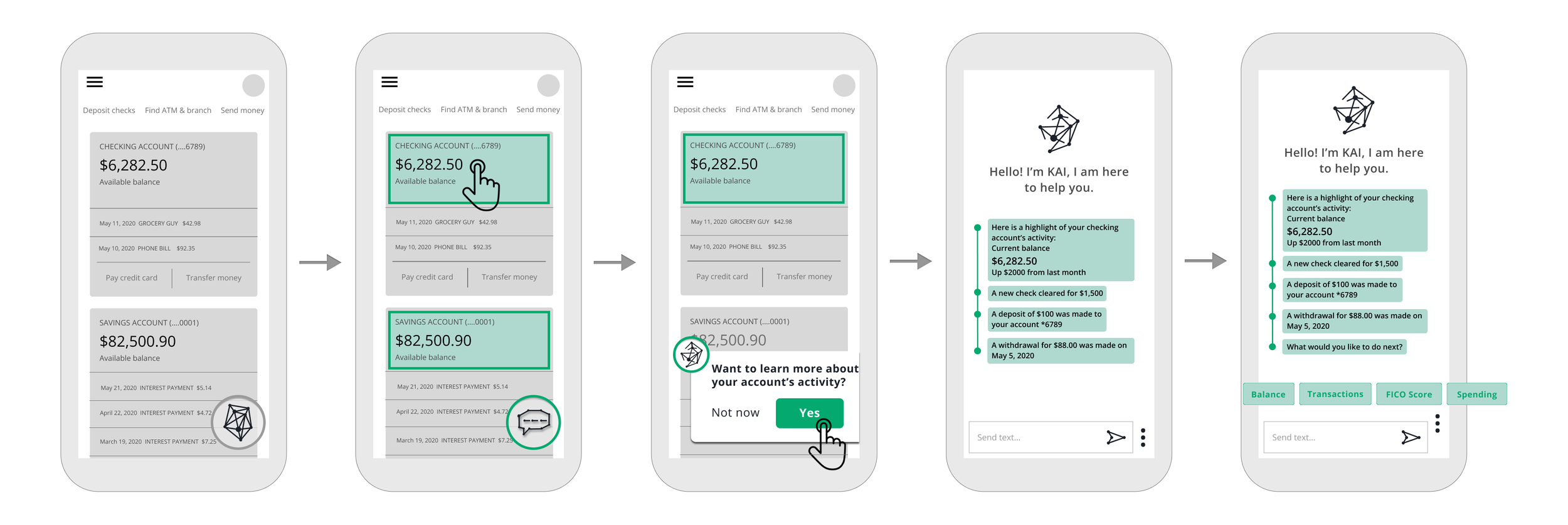
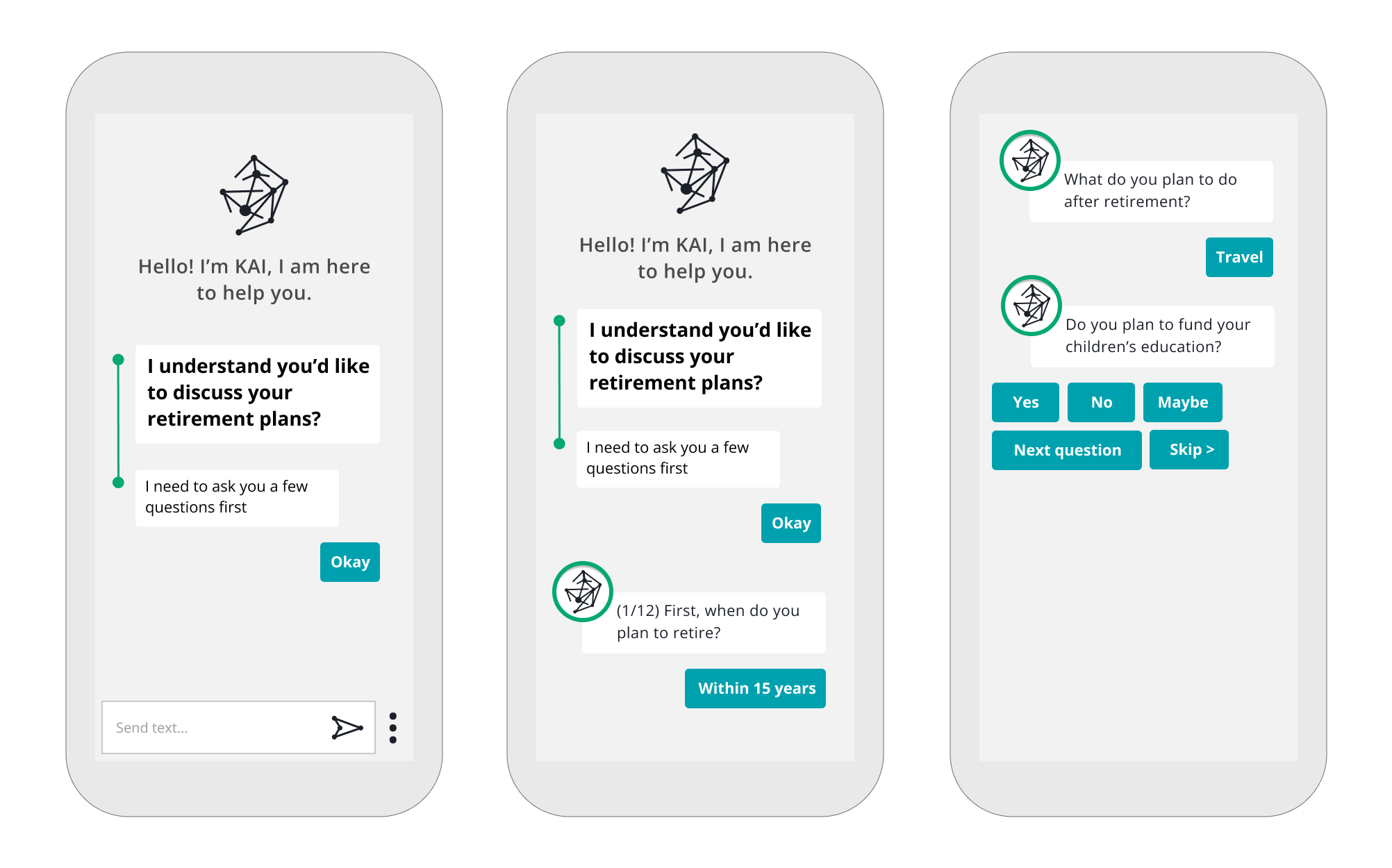
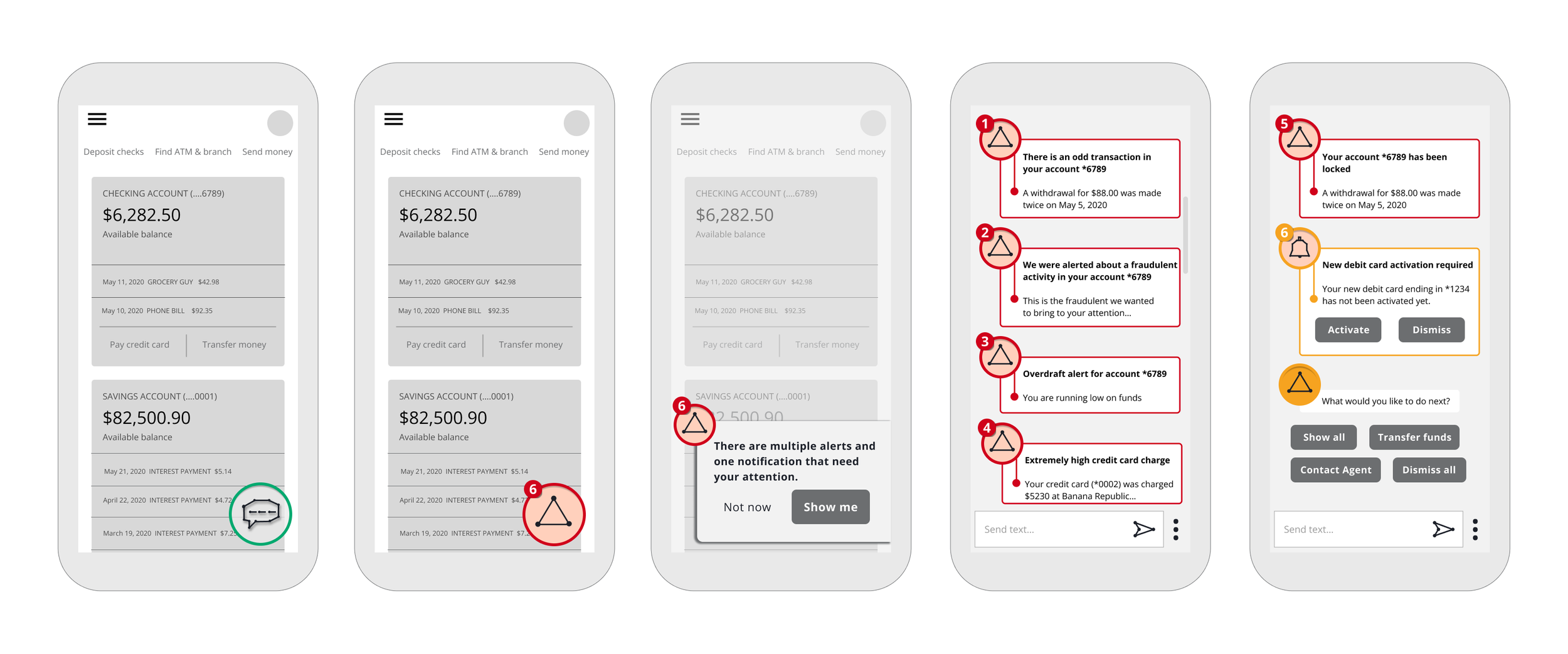
Quick Access Mode - Mobile v.1
KAI Locked-in State on mobile. Locked in context conversation.


Daily Cycle
An early idea about the User Inactivity state: With time, KAI turns itself into a sunrise - sunset scene and night sky with the moon appearing. Because KAI knows the birthday of the particular user, the star constellation in the night sky turns into their star sign. The storyboard scene can be used for other special occasions as well. The animation is smooth and the music is relaxing.

Outcome
When I started thinking about what this “character” would be at its core, I immediately thought about mirroring a personality. My thoughts were in the direction of a hairstyle, clothes, and accessories, all customizable. But was it a man or a woman, are they elderly and wise, are they standing or sitting down? In terms of emotions, perhaps I could design a set: one friendly, one serious/neutral? I thought of forming the character after people like Warren Buffet or Christine Lagarde, someone who would immediately be associated with finance. And secondly, since the name of the company, Kasisto, translates to Cashier or Treasurer from Esperanto, I landed on an idea about a coin purse named Pursey.

A week into the project Kasisto’s banking virtual assistant remained illusive. I even experimented with breaking the company’s logo apart and having it animate, which in retrospect, was the right direction for what was to come. After my first presentation I received a most valuable feedback from Kasisto's Director of Marketing and some constraints that truly helped further my work.
The VA was to be named KAI, after Kasisto Artificial Intelligence. It was to be a genderless objectless entity that represents a higher promise beyond just a persona. It was to be an experience. In other words, what Kasisto brings to the table is a model driven by data, instead of a conversational persona. It could abstract and therefore lend itself well to various branding. It has movement to it, as well as states. As in: state of Alert, state of Thinking, state of Calculating, Idleness, even Regret or Satisfaction (Happiness).
User Testing
How I tested the idea in front of real users?
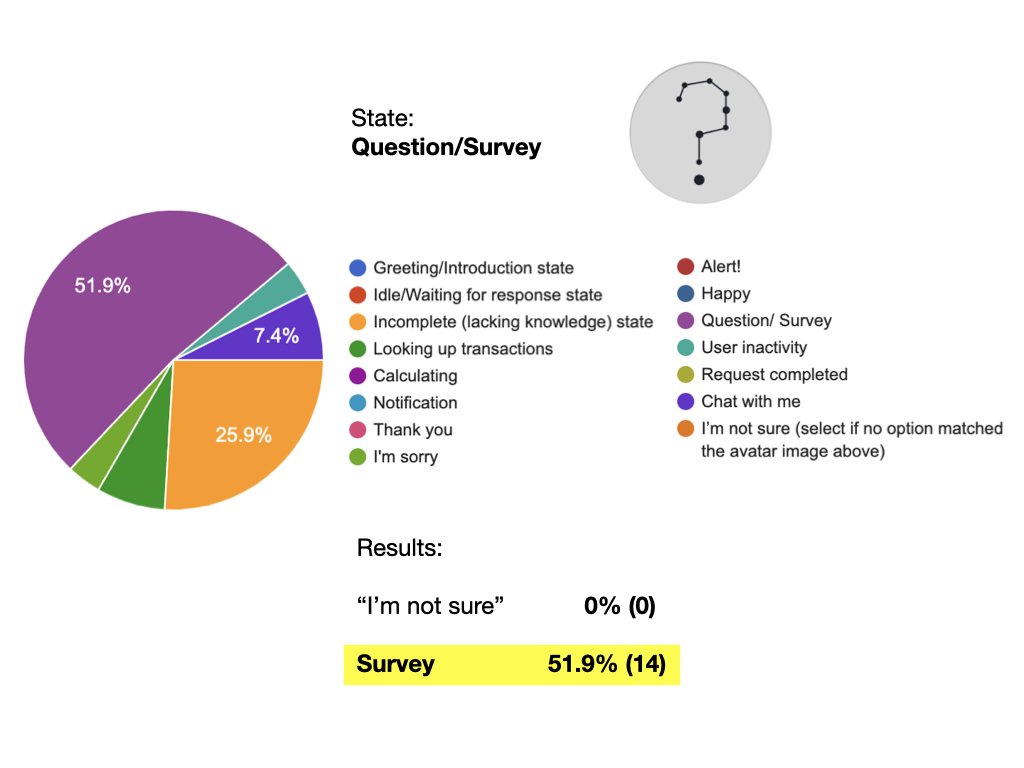
Users were shown static images of KAI avatar states and asked to match the image to a description. For any avatar they couldn’t match, they were to select: “I’m not sure” and provide feedback in free form.
Total number of participants: 27
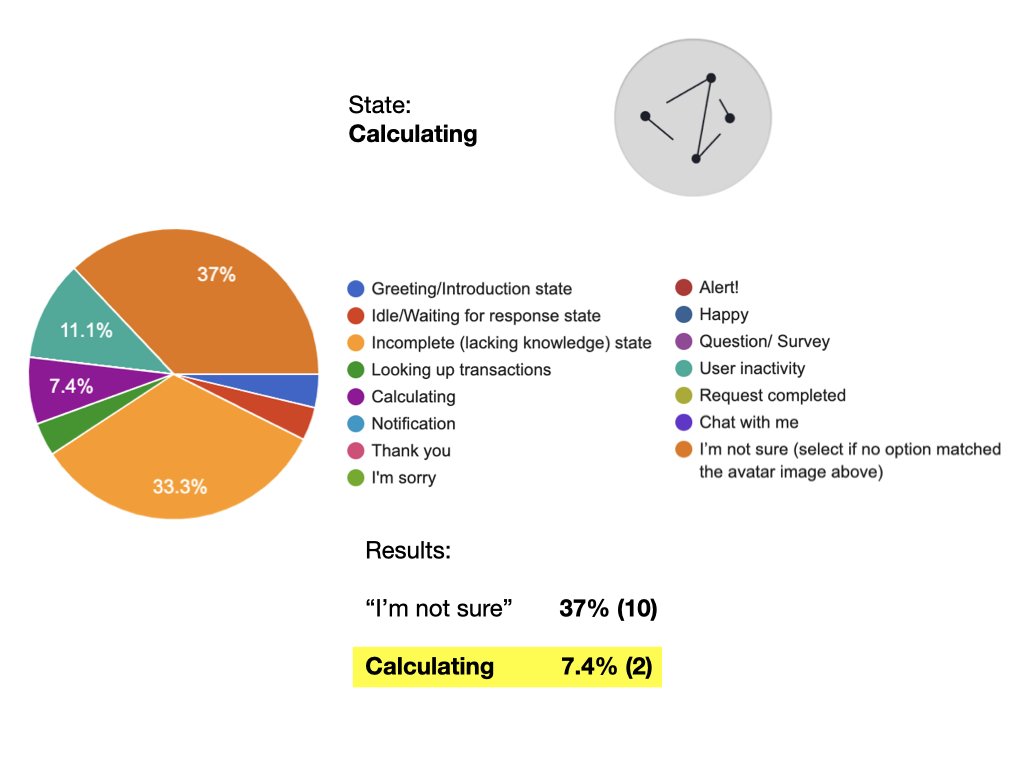
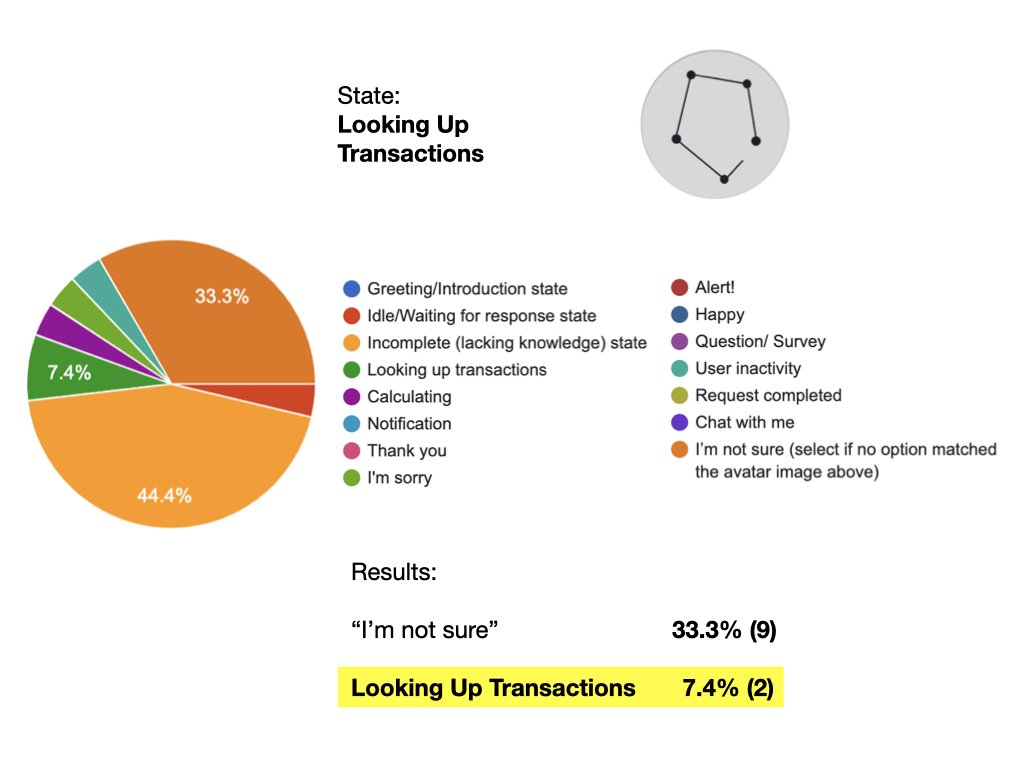
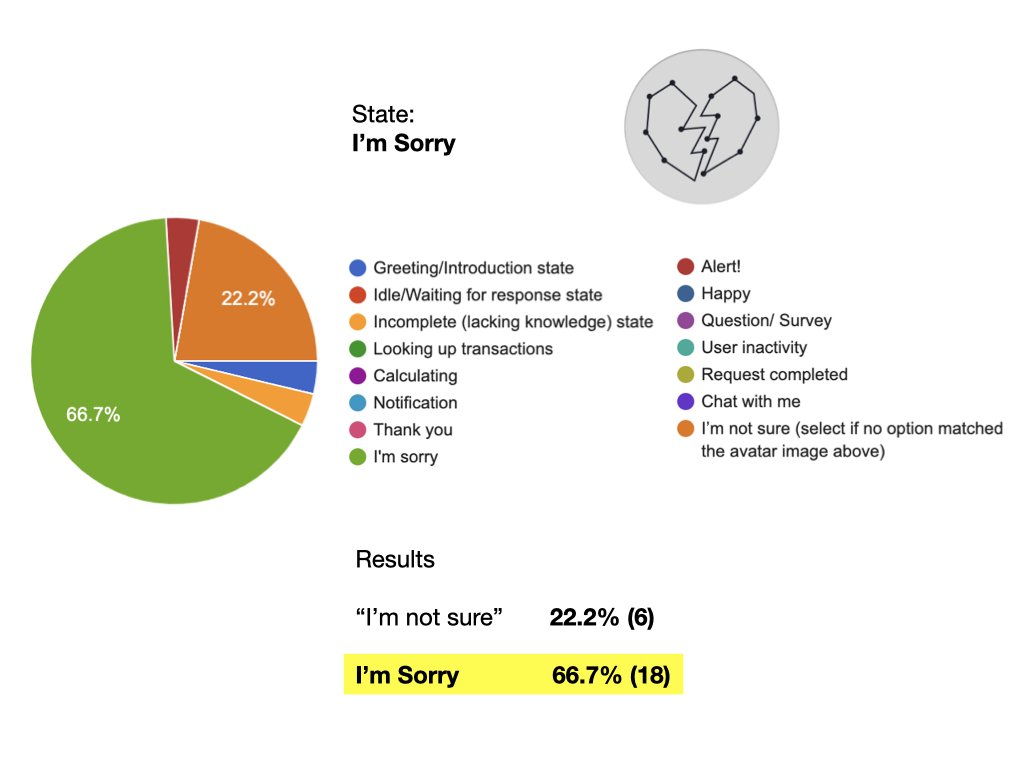
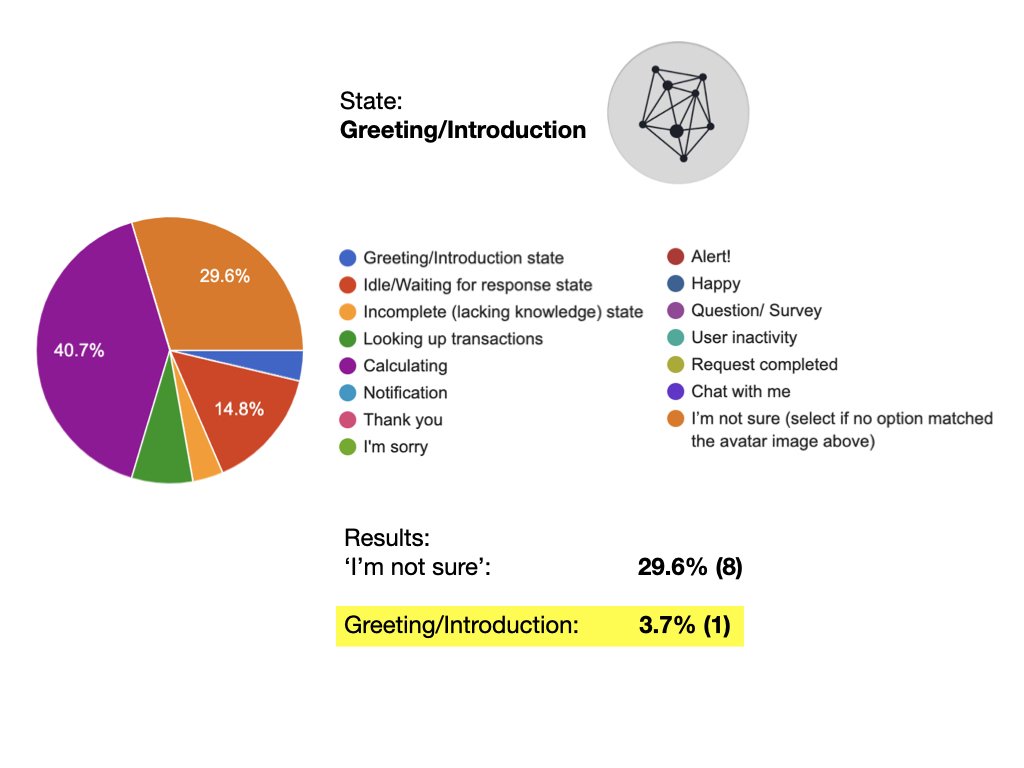
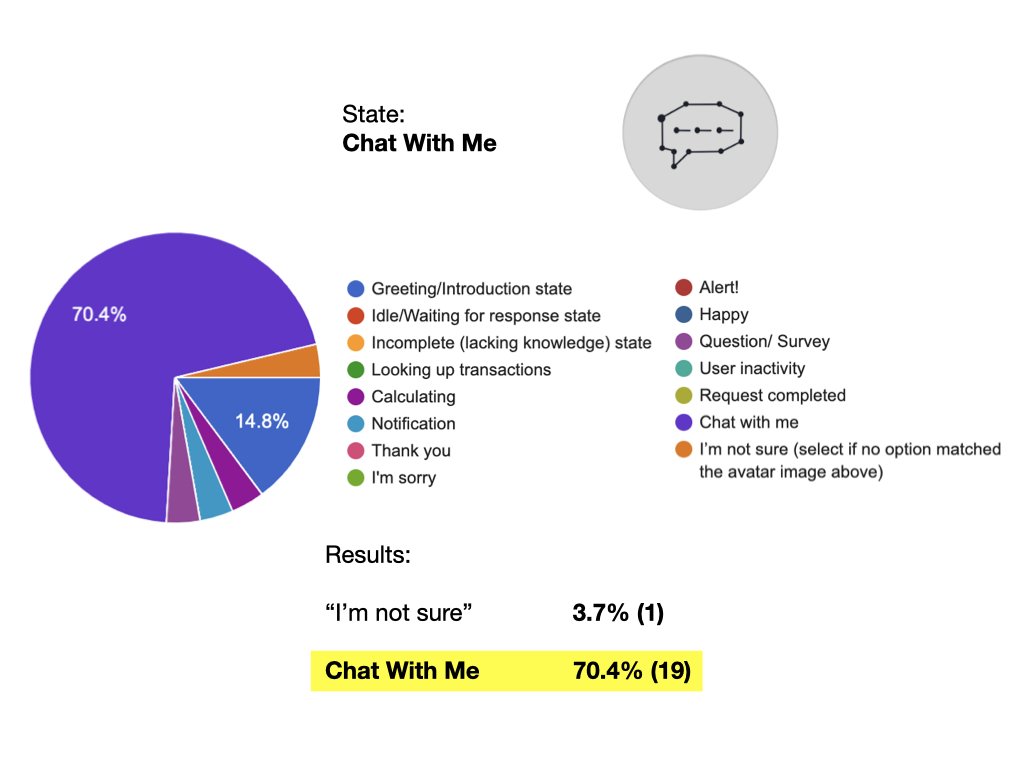
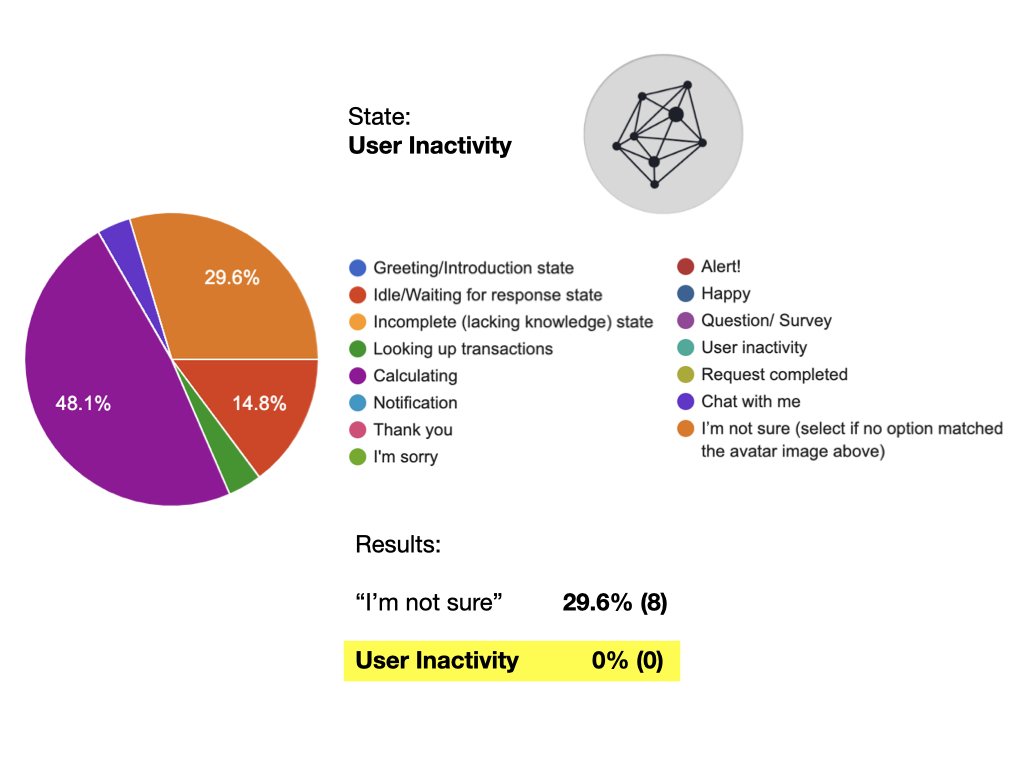
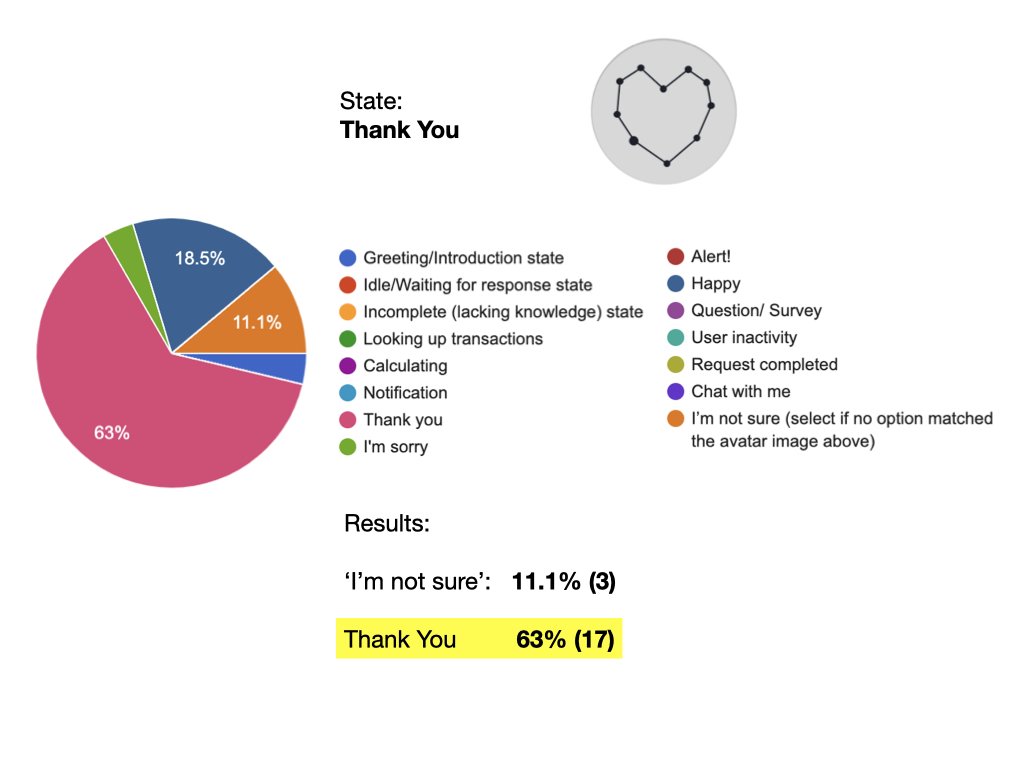
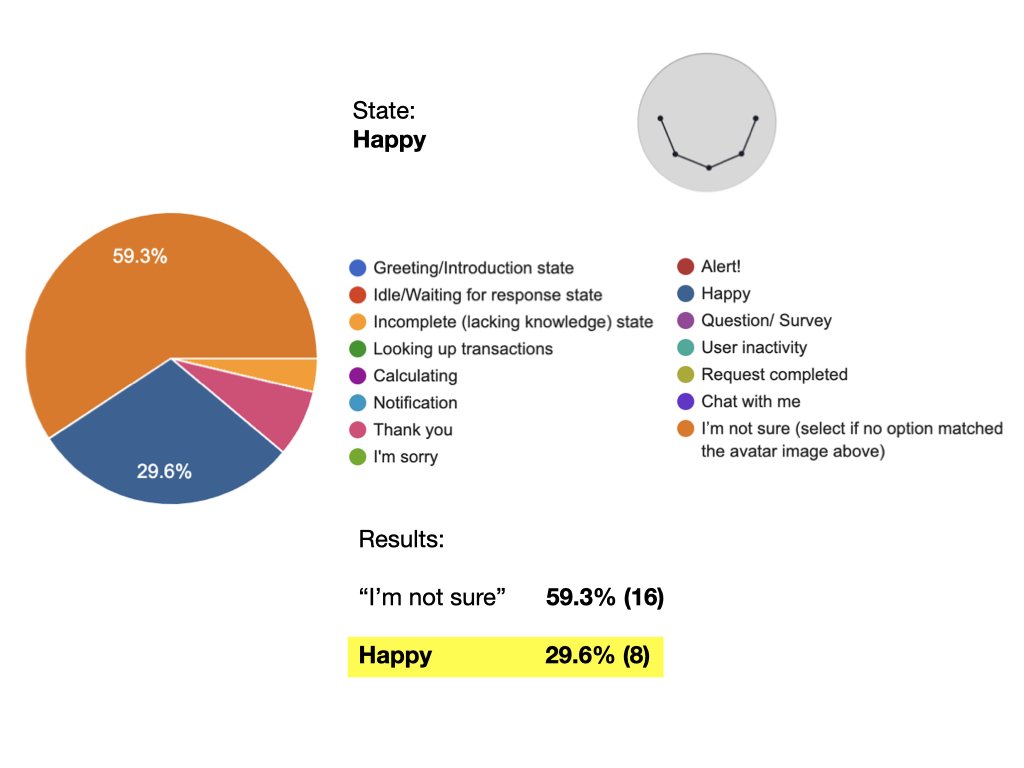
While the majority of testers enjoyed the process of trying to match the avatar states with the appropriate image, overall only a few avatar states seemed to match the intended behavior and the larger majority of users were confused by the avatar states. They thoguht the states were too ambiguous and unclear as to what they were meant to be. Motion was added to communicate intent.